
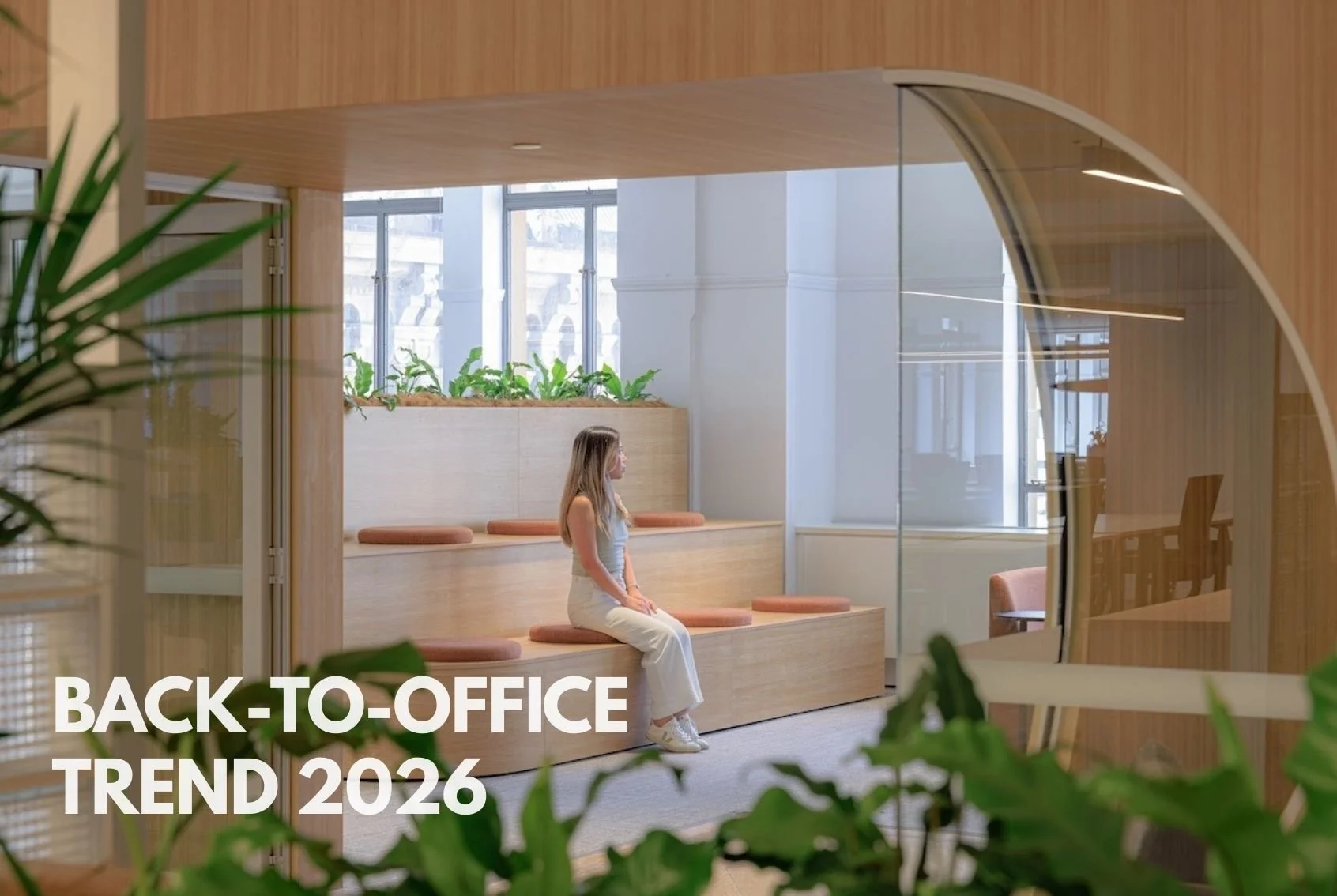
In 2026, workplaces are being designed around why people come in, not how often, prioritising collaboration, focus, and connection beyond what remote work cannot offer.
The great return: A shift toward purpose-driven office time
Workplace research shows people are more engaged when office time is intentional. According to AHRI (2025), 75% of Australian workers say being in the office encourages stronger connection with colleagues, while 65% believe it improves collaboration and cooperation.
Rather than using the office for individual desk-based work, teams are prioritising in-person time for shared activity. This shift is changing how workplaces are planned, with greater emphasis on spaces that support interaction, movement and collective work rather than fixed, individual workpoints.
How this shift is reshaping office layouts:
Desks become a support function, not the centrepiece. Individual workpoints still exist, but they no longer shape the workplace. Space is rebalanced around how people actually use the office.
Collaboration is planned, not incidental. Shared zones are positioned and scaled to support workshops, teamwork and project activity rather than relying on leftover meeting space.
Layouts are designed to adapt. Modular planning and flexible furniture allow workplaces to evolve as teams, headcount and work styles change over time.
Rethinking the workplace experience
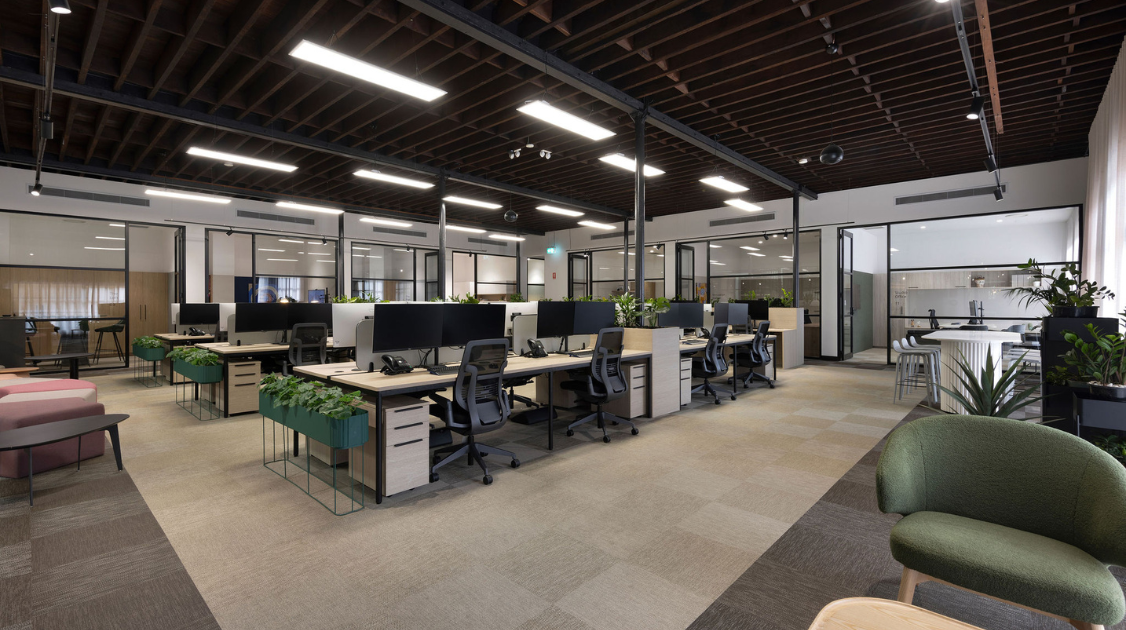
Offices are increasingly adopting hospitality-led design, shifting away from rigid corporate environments to open-plan spaces that feel more welcoming and comfortable. Thoughtful seating, informal meeting zones and cafe-style spaces encourage people to spend time in the workplace, supporting connection and productivity without compromising professionalism.
In practice, this translates into:
Ergonomic lounge settings designed for extended working sessions, not transitional use
Breakout areas positioned as active work zones rather than peripheral spaces
Open-plan floors layered with varied settings, allowing teams to move between collaboration and focused work with ease.
Supporting focus in an AI-enabled workplace
As AI tools become part of everyday work, employees need spaces that support concentration and reduce cognitive load. Quiet areas are no longer a luxury. They are becoming essential for productivity and wellbeing.
Research from ACTU (2025) shows 51% of Australian workers say they need more skills and training as technology and AI change how they work. The workplace environment must support this transition by offering spaces that allow people to focus, learn and adapt.
Effective workplaces now require:
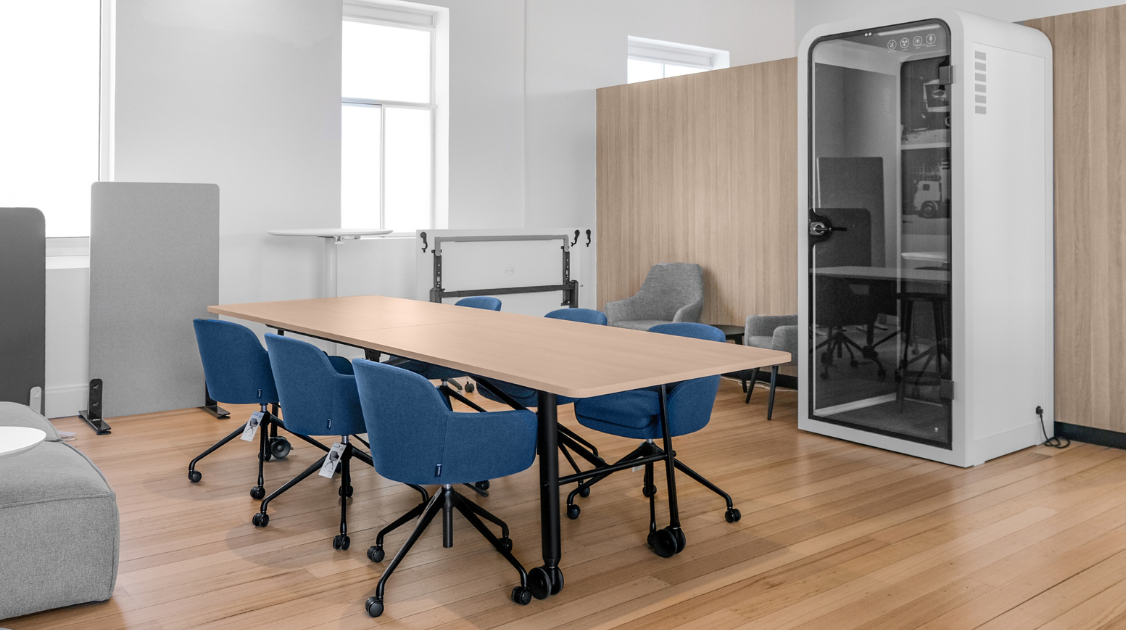
Small, quiet zones for focused work
Acoustic separation between social and task-based areas
Clear zoning that helps people choose how they work
Sustainability is now a baseline expectation
Sustainability and ESG goals are no longer optional. Businesses are prioritising low-carbon fit-outs and responsibly sourced furniture. Locally manufactured products help reduce transport emissions, improve quality control and support long-term value.

Designing workplaces that perform
At Krost, we work closely with our clients to respond to these shifts in a practical way. Our range of office furniture, supported by local manufacturing, allows us to tailor solutions to the specific needs of each project, supporting flexibility, sustainability and the performance of both the workplace and the people within it.